How to Buy a Dockside Home on Eagle Mountain Lake
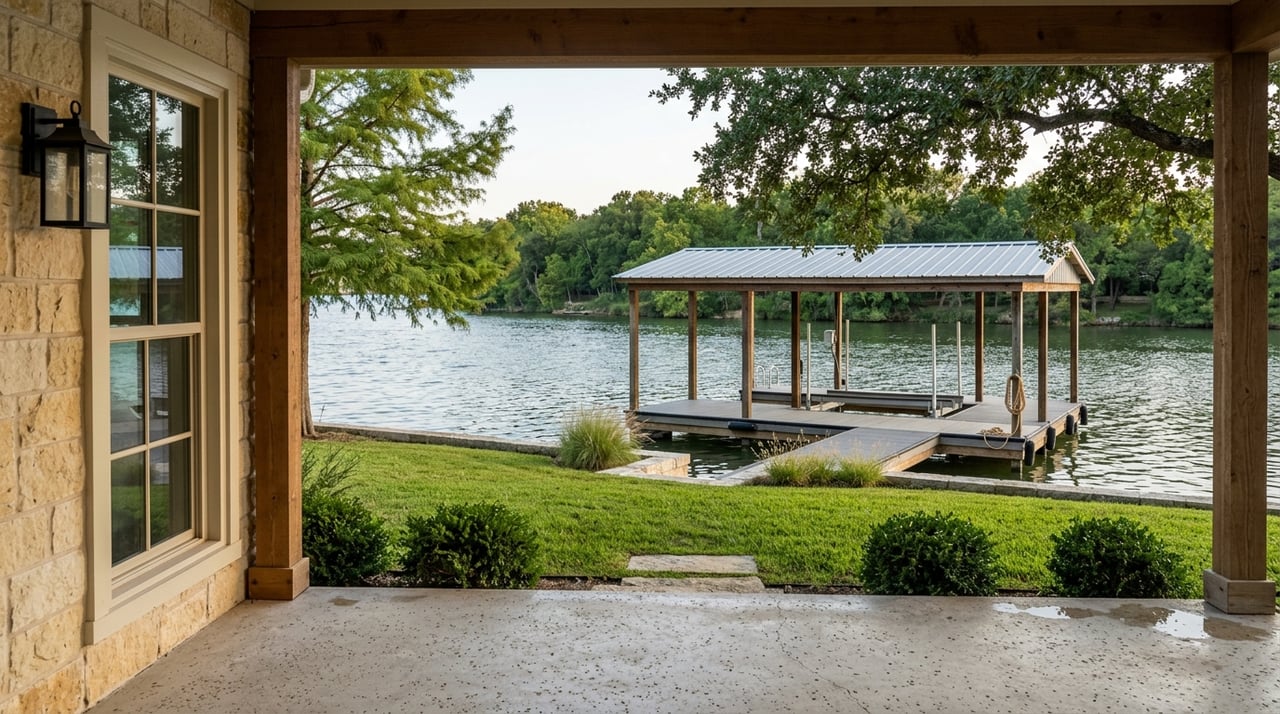
Thinking about waking up to open water, a private dock, and sunset views on Eagle Mountain Lake? It sounds simple until you realize a dockside purchase is about much more than the house itself. If you want to buy with confidence, you need to understand shoreline rights, permit rules, HOA limits, and insurance questions before you close. Let’s dive in.
Eagle Mountain Lake is a Tarrant Regional Water District reservoir in northwest Tarrant County. Texas Parks and Wildlife lists the lake at 8,738 acres with a maximum depth of 47 feet, while the Texas Water Development Board’s 2018 survey cites 9,246 acres at conservation pool. The takeaway for you is simple: this is a large, active lake where lot location and shoreline details can make a big difference.
TRWD says the lake is open 24 hours a day, 7 days a week, and governed by its General Ordinance. It also posts lake-level information, which matters because water-level fluctuation is part of normal use on Eagle Mountain Lake. TPWD notes the lake can fluctuate by 2 to 9 feet.
That means a home’s relationship to the water can change with conditions. A dock that looks ideal during one visit may function differently when levels are down, so it helps to evaluate the shoreline with both access and long-term usability in mind.
Not every dockside lot lives the same way. TPWD describes the lower end of the lake near the dam as clearer, while the upper end is more stained and includes reed beds. Mid-lake and lower-lake areas have many piers and boathouses, which TPWD notes also serve as fish cover.
For you as a buyer, that means the exact stretch of shoreline matters as much as the street address. A protected cove, an open-water lot, and a property near existing marina or boathouse areas can each offer a different experience for boating, views, and day-to-day lake use.
Public lake access also hints at how this lake functions during lower water conditions. TRWD says Twin Points Park has a public ramp that can launch when the lake is up to 11 feet down. That is a practical reminder that water swings are normal here, not unusual.
A lakefront label does not automatically mean you can build, expand, or fully use the dock setup you have in mind. On Eagle Mountain Lake, one of the biggest questions is whether the property actually has enough approved shoreline for the improvement you want.
TRWD sizes residential structures by the linear feet of shoreline owned. It allows one walkway to one structure, and when multiple lots or large undivided tracts are used to determine allowable area, an agreement must be signed and recorded. A permit application also requires a recorded plat showing shore-front dimensions and proof of ownership.
That means you should confirm several things early in the process:
If a dock is shared, that detail matters even more. TRWD states that community boat structures are treated as commercial operations and fall under its Commercial Facilities Ordinance, so shared arrangements should be reviewed carefully.
One of the most important facts for dockside buyers is this: TRWD requires a permit for any construction, placement, or operation of a structure, improvement, or fill at or below 649 feet msl on Eagle Mountain Lake. Construction without an approved written permit is prohibited.
TRWD also says its flood easement spans land between 649.00 and 668.00 feet, and its materials note a current 100-year flood level of 657.35 feet. That makes permit history and site compliance critical when you evaluate a dock, seawall, retaining wall, dredging work, or shoreline fill.
The permit packet requires:
If improvements already exist, you want to know whether they were properly permitted and whether later changes were approved. A great view is valuable, but verified compliance can protect you from expensive surprises.
Dock rules on Eagle Mountain Lake are detailed, and they can affect both function and future plans. TRWD’s residential guidelines limit dock size by shoreline owned and prohibit enclosed structures.
The same guidelines allow only limited solid sidewalls and a small lower-deck storage area. They prohibit toilets and fuel pumps, and they require a photocell light on structures that extend more than 50 feet from shore. Electrical work must be performed by a master electrician.
TRWD also regulates materials. Items exposed to the elements generally must be cedar, redwood, treated wood, concrete, or steel. Approved flotation is limited to closed-cell polystyrene or encapsulated foam, while metal barrels and creosote materials are not allowed.
These details matter if you are comparing homes with older docks. A structure may look serviceable at first glance but still raise compliance, repair, or upgrade questions once you review the file.
On Eagle Mountain Lake, your due diligence should go beyond the dock itself. TRWD says retaining walls must improve shoreline alignment, and dredging must maintain a gently sloping lake bottom.
The district also notes that erosion or silt controls may be required. Its guidelines further allow silt screens for dredging and call for erosion control in shoreline disturbance areas.
If a property shows signs of recent shoreline work, storm repairs, or reshaping near the water, ask whether permits were issued. TRWD also states that a permit does not override county, city, state, federal, or deed-restriction requirements, so multiple layers of review may matter.
A dockside purchase is not just about TRWD rules. In some neighborhoods around Eagle Mountain Lake, HOA documents may be just as important as the survey.
Under Texas Property Code Chapter 207, owners in a property owners’ association are entitled to copies of governing documents, including restrictions, bylaws, rules and regulations, and a resale certificate. The statute’s description of the resale certificate indicates it can include assessment amounts and frequency, along with certain lawsuit information.
For you, that means the HOA packet may answer key questions such as:
Because HOA rules can be stricter than TRWD rules, it is important to compare both. A feature may be allowed by TRWD but still limited by neighborhood covenants.
Insurance is another area where lakefront buyers should slow down and ask direct questions. The Texas Department of Insurance says standard home insurance does not cover flood damage, and a separate flood policy is needed.
TDI also notes that if the home is in a designated flood zone, your lender will require flood insurance. It further explains that floods can happen outside mapped zones and that many flood policies have a 30-day waiting period.
You should also ask how the policy treats lake-related improvements. TDI says most Texas home policies include other-structures coverage, usually about 10 percent of the dwelling limit, but coverage varies by company.
That makes these questions worth asking before closing:
If you plan to keep a boat, TDI says homeowners coverage for boats is limited and a separate boat policy is usually needed for liability and higher-value boats.
Even a beautiful dockside property can come with hidden maintenance costs. Before closing, it is smart to review whether the dock appears to meet current TRWD requirements and whether repairs were done properly.
Useful checks include:
These are not small details. They can affect safety, future permit approvals, and your repair budget after move-in.
Two more issues deserve early attention during your option period. First, if the property uses an on-site sewage facility, permit history and local oversight should be confirmed early.
The research report notes that Tarrant County does not regulate establishments within 2,000 feet of Eagle Mountain Lake, so buyers with septic or OSSF questions should confirm the correct authority and permit history right away. That is especially important for older lake properties where records may not be obvious from the listing.
Second, boat ownership on Eagle Mountain Lake comes with practical upkeep concerns. TPWD says zebra mussels have invaded the lake, and boat owners should clean, drain, and dry boats, trailers, livewells, bait buckets, and other gear before moving to another water body.
If you are serious about buying a dockside home on Eagle Mountain Lake, your best move is to treat the waterfront features as part of the transaction, not as extras. The house, the shoreline, the dock, the permit file, and the HOA rules all need to work together.
A careful buying process usually includes reviewing the survey against the shoreline, checking permit history for the dock and shoreline work, reading HOA documents and the resale certificate, and asking clear insurance and flood questions before deadlines pass. On this lake, peace of mind often comes from verifying rights and compliance as much as choosing the right view.
When you want local guidance on lake properties in North Texas, the team at Lori Mayo Real Estate Group brings the hands-on, place-based insight that can help you buy with more clarity and confidence.
Stay up to date on the latest real estate trends.